
Cl@ve Digital in Spain: What It Is and How to Obtain It as a Foreigner?
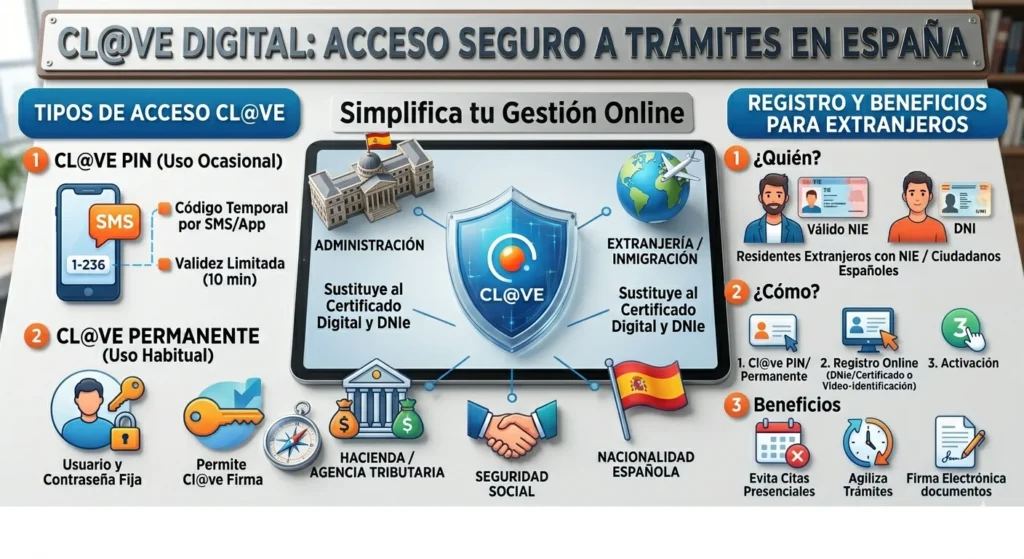
If you live in Spain and need to carry out official procedures online, understanding the Cl@ve digital system is essential. This tool is key to securely accessing services such as immigration, Social Security, the Tax Agency, or applying for Spanish nationality. What is the Cl@ve system? Cl@ve is Spain’s official electronic identification system, developed to…
Tax Obligations for Digital Nomads Residing in Spain
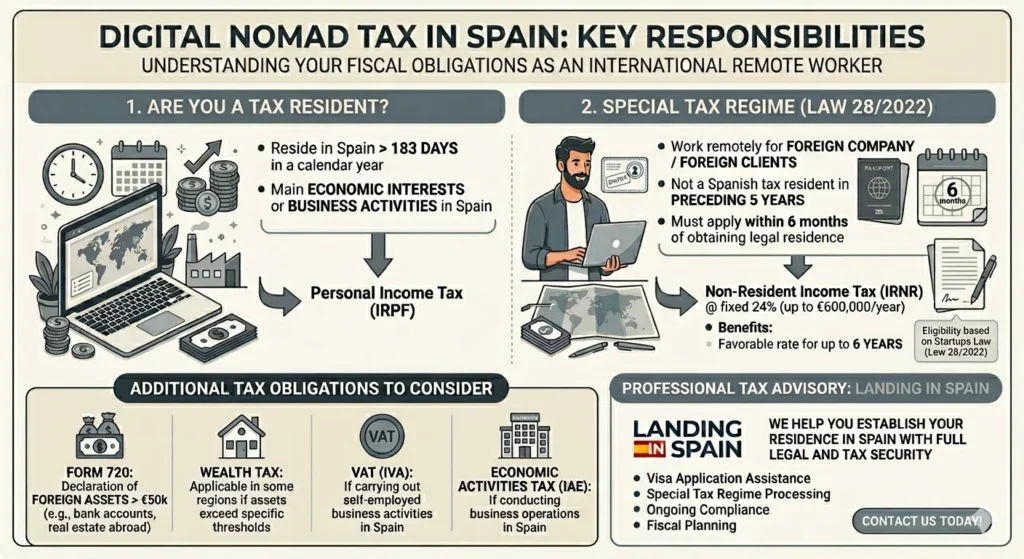
Spain has become an increasingly attractive destination for digital nomads, especially following the introduction of the visa for international remote workers. However, legally residing in the country entails specific tax obligations. Below is a concise overview of the key aspects. When Is a Digital Nomad considered a tax resident in Spain? An individual is considered…
Student Visa for Spain: Requirements and Application Procedure
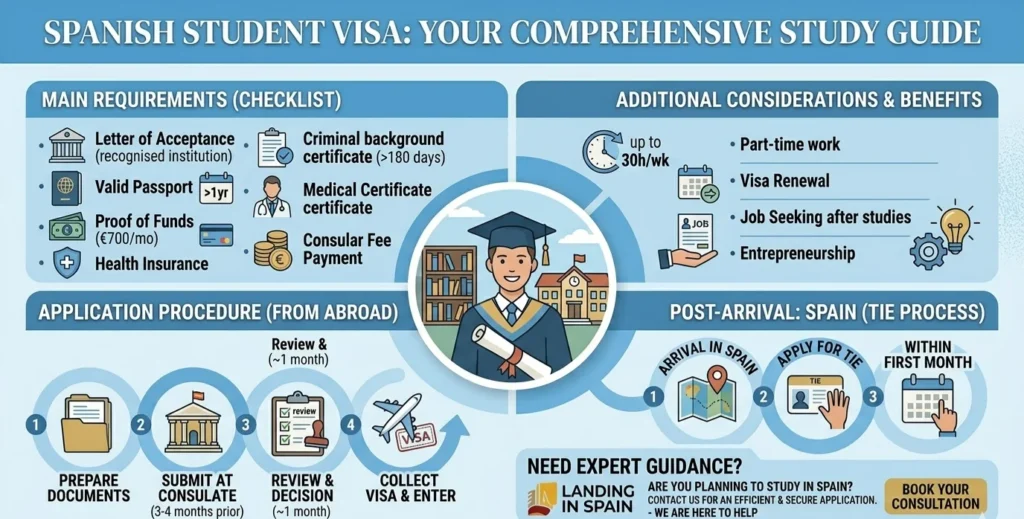
The student visa enables non-EU citizens to legally reside in Spain for the purpose of pursuing studies at accredited educational institutions. This type of visa is required for academic programs exceeding 90 days. Main requirements To apply for a student visa, the following documents and conditions are generally required: Letter of acceptance from an officially…
How to Apply for a NIE in Spain
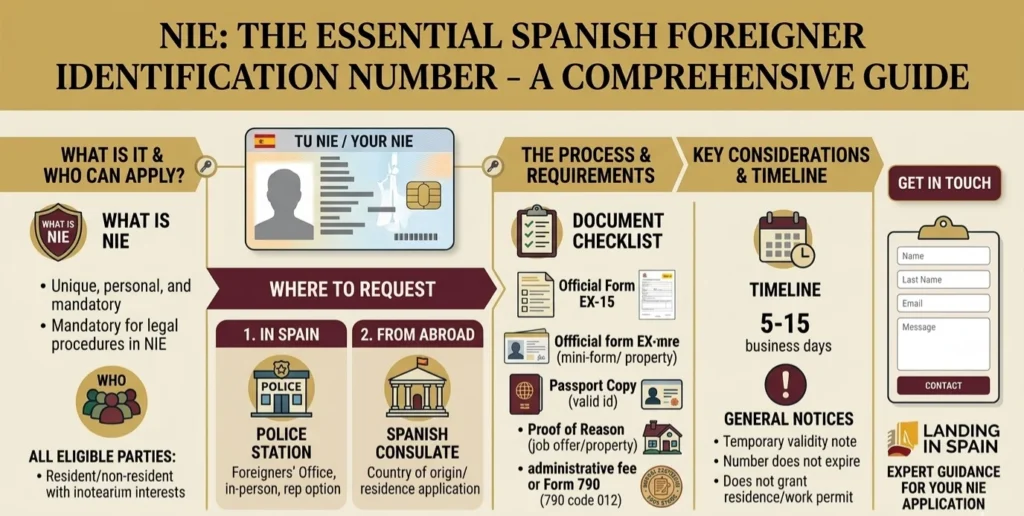
The Foreigner Identification Number (NIE) is an essential document for any foreign national with economic, professional, or social interests in Spain. This number is unique, personal, and mandatory for completing most legal procedures in the country, such as opening a bank account, signing an employment contract, purchasing property, or enrolling in educational programs. Who can…
Family Reunification under Spain’s New Immigration Regulation (May 2025)
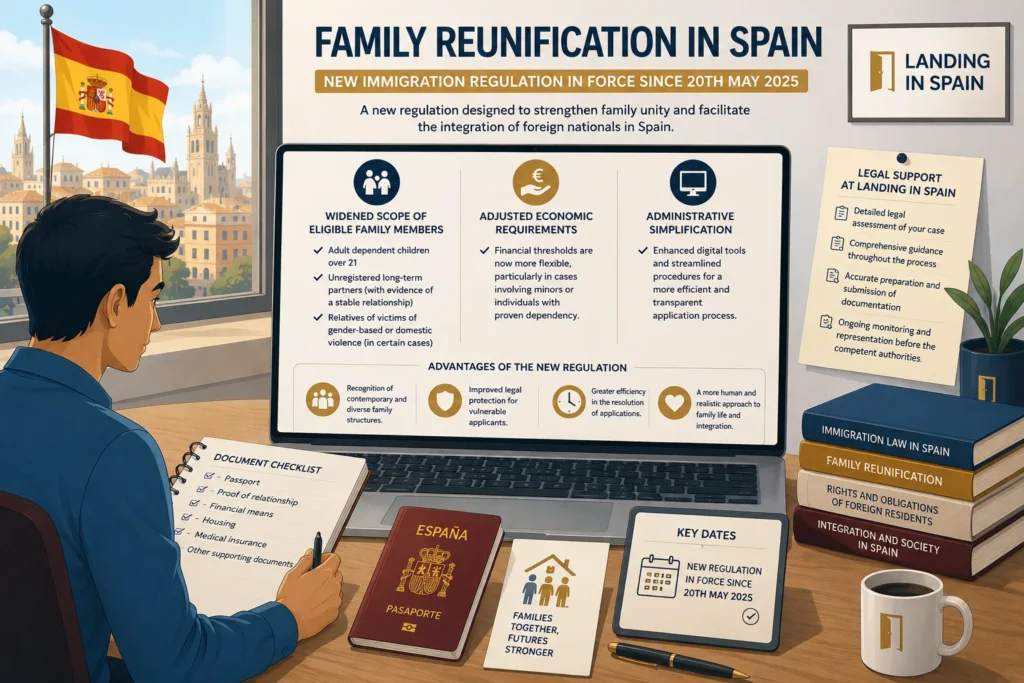
The entry into force of Spain’s new Immigration Regulation on 20th May 2025 introduces substantial improvements to the legal framework governing family reunification, with the aim of reinforcing family unity and facilitating the integration of foreign nationals within Spanish society. Definition and legal basis Family reunification is a legal mechanism that enables foreign residents in…
CCSE Exam: A Requirement for Spanish Nationality
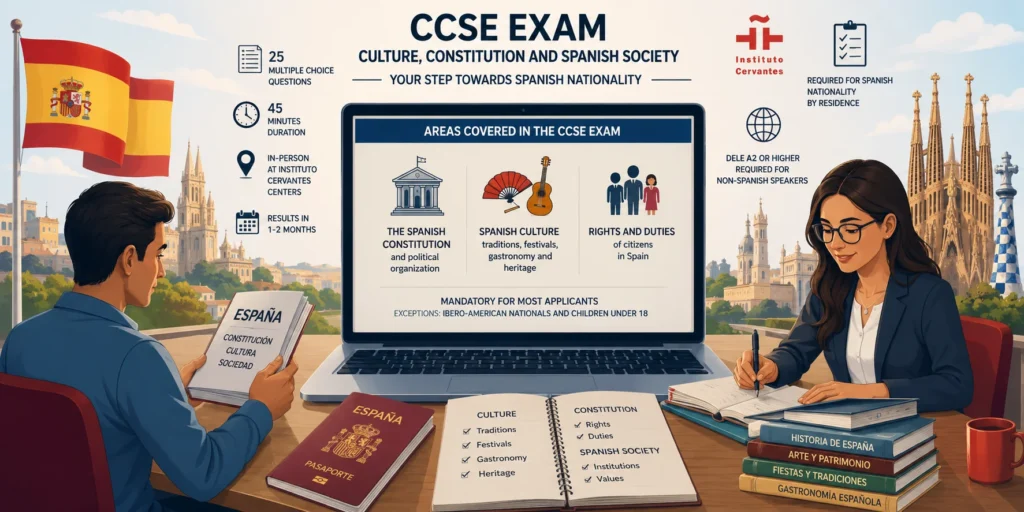
The CCSE exam (Culture, Constitution, and Spanish Society) is an essential requirement for those seeking Spanish nationality by residence. This exam, administered by the Instituto Cervantes, assesses the applicant’s knowledge of Spanish culture, the Constitution, and Spanish society. Who must take the CCSE exam? The CCSE exam is mandatory for all foreigners applying for Spanish…
Digital Nomad Residence in Spain
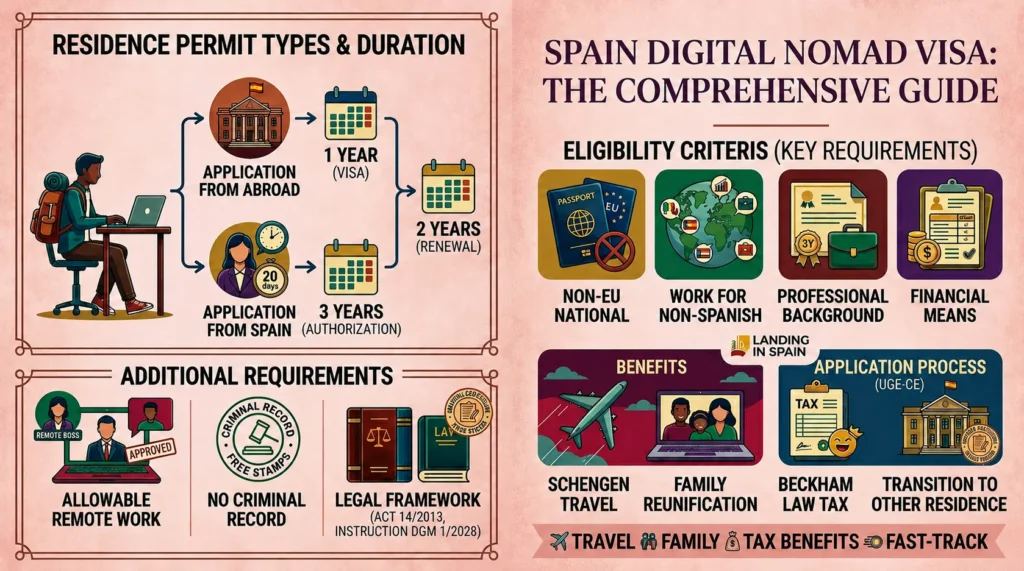
Spain has introduced a residence permit specifically designed for international remote workers, commonly known as digital nomads. Spain is an attractive destination for skilled professionals. What Is the Digital Nomad Visa? The Digital Nomad Visa (or International Teleworking Visa) allows non-EU nationals to reside in Spain while working remotely for companies or clients located outside…
Spanish Nationality by Residence
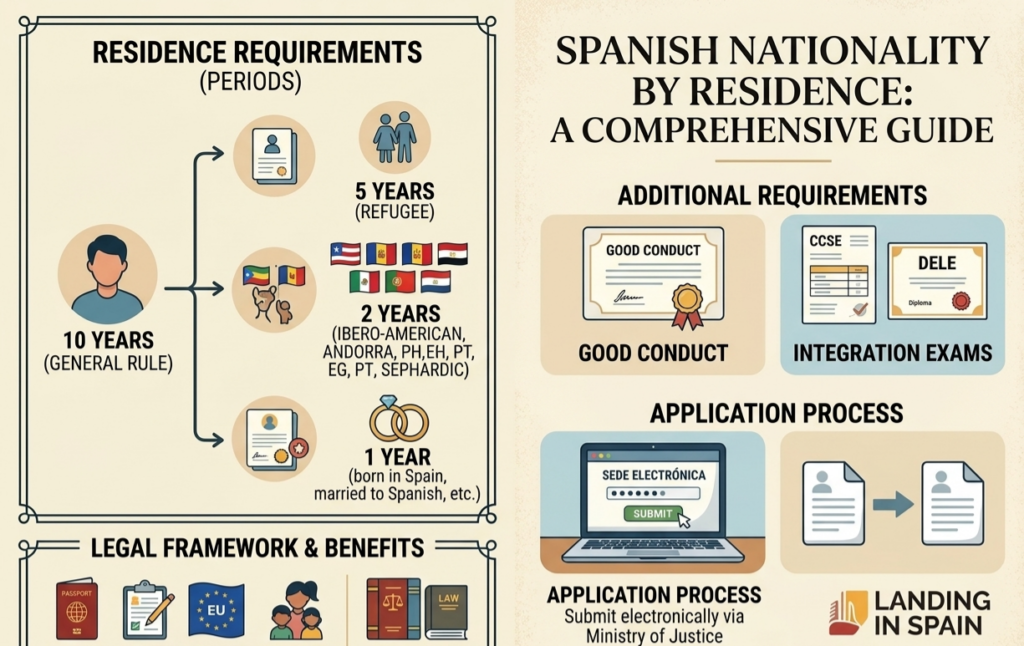
Spanish Nationality by Residence The acquisition of Spanish nationality by residence requires, as a general rule, that the applicant has resided in Spain legally, continuously, and immediately prior to the submission of the application for a minimum period of ten (10) years. Exceptions to the General Residence Period The required period of residence may be…